
The Developmental Model: A Couples Therapy Essential || By TJ Dubovich, MA, LMFT
In the world of couples’ therapy, there have been a handful of dominant models that have become popular to utilize with clients in recent years. Some of these include the Gottman Method (created by John and Julie Gottman), Emotionally-Focused Therapy (created by Sue Johnson), Relational Life Therapy (created by Terry Real) and my personal favorite, the Developmental Model created by Pete Pearson and Ellyn Bader. All of these models have shown to be successful in the treatment of relationships, however, I find the DM (Developmental Model) to be unique. In particular, how to conceptualize the road map of your objectives and interventions within the framework of the current presentation of the couple. The DM allows for continuous reflection of the developmental growth and challenges experienced by each partner, which is a useful assessment tool when figuring out “where to go next” with a couple. When couples are distressed or stuck within deeply rooted patterns, having a sense of direction is necessary for the clinician to stay afloat of the stormy waters that can present itself but also for the clients to have structure within their own dysregulation.
One of the main pillars of the developmental model is the concept of differentiation. Differentiation, in the therapeutic context, refers to “the active ongoing process of a person being able to define their thoughts, their feelings, their wishes and their desires to one another and to be able to tolerate the partner doing the same thing” (Bader, 2026). If this sounds familiar, you may recognize the term from an earlier therapy pioneer, Murray Bowen, who utilized differentiation as a core tenet in his Family Systems Theory. Bowen insisted that a well-differentiated person can “distinguish logical thought from emotional reactivity during stress or conflict” (Lampis et. al, 2019). If you’ve ever worked for couples, this may sound like a dream goal! However, there is real potential for this experience if we use the DM to challenge folks this way. Differentiation exists on a spectrum. Like many concepts, we rarely, if ever, remain stagnant in our level of differentiation. Thus, once we understand the triggers for regression within our clients, we can apply developmental growth challenges more quickly.
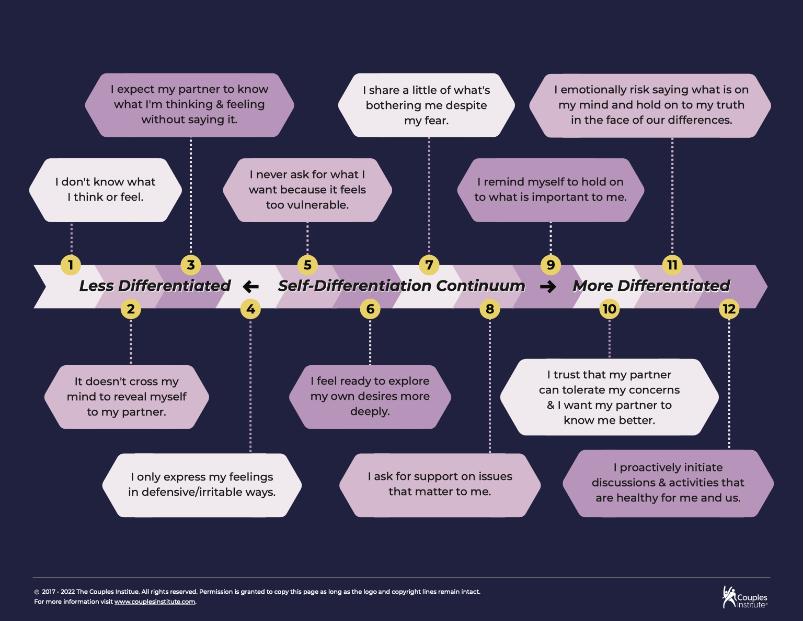
There are 2 different types of differentiation that exist. One is referred to as self-differentiation, which is the notion that an individual understands their own needs and belief systems. They can handle the discomfort/tension of being unique, while maintaining their own sense of self and regulation. (See image below).
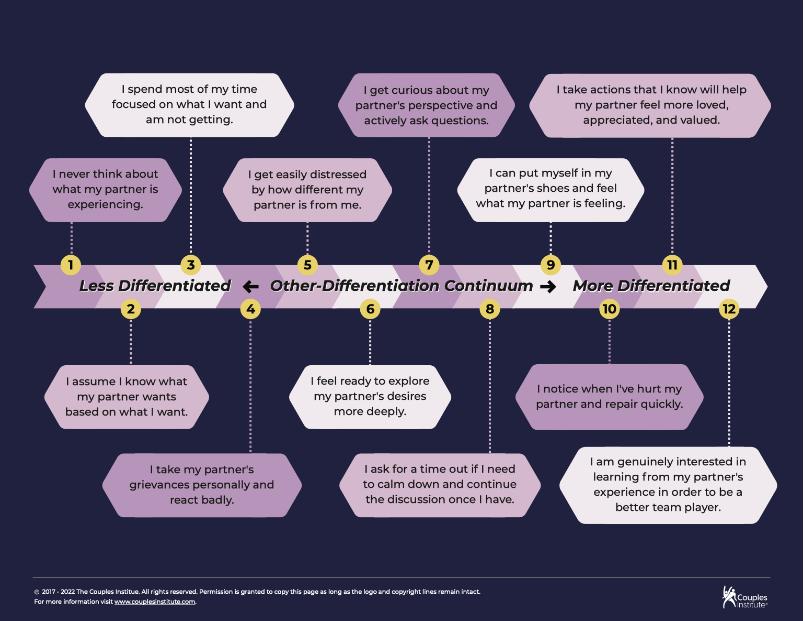
The other is other-differentiation, which is very similar to self with a slight variation in focus. Other-differentiation is when an individual can maintain their own thoughts, beliefs, and desires while being in conflict or difference with others, such as their partner. (See image below). This notion is quite important in relationship because without being able to hold to our own self within a relational connection, we can lose our authenticity and forgo meeting needs. This element has been the most transformational element in my own work with clients. Many of us have little to no differentiation with others, as we are raised to conform to the adults/authority figures in our lives. We are allowed to have some authenticity, however, only in the confines of what is acceptable to the expectations of those around us. Thus, folks enter into relationships where there are 2 unique humans with individual thoughts, feelings and desires…coming together to work as a team with shared decisions and values. How do we conform and please the other and be ourselves? It can feel impossible. Yet, it IS possible through the growth of differentiation.
Another tenet of the DM is the integration of neurobiology. When our clients can have insight into what is happening within their brains and nervous system, it can create deeper understanding of their responses within themselves and to their partners. One of the first psychoeducation items I provide my couples is teaching them the hand model of the brain and the vagal “window of tolerance”. This integrates Polyvagal Theory, which promotes that the ideal “window of tolerance is the zone of autonomic nervous system arousal in which you can process information, manage emotions, and respond to stress without becoming overwhelmed or shutting down” (Keller, 2026). Once individuals can begin to identify when they are out of their window of tolerance, the ability to differentiate becomes more accessible. These simple yet effective interventions with clients can have lastly impact on how an individual can interact within their own body and with their partner.
If you are interested in learning more about the Developmental Model, check out: www.couplesinstitute.com for more information on trainings, group consultations, and the literature available.
References:
Bader, Dr. E. (n.d.). Differentiation in couples relationships. Couples Institute. https://www.couplesinstitute.com/differentiation-couples-relationships/?srsltid=AU7gw4Vdsf5J7uhlTJ2vXBplZxWVxLfXphE3dxh6EYHw5XtGGkRb0mmD
Keller, A. (2026, February 19). What is the window of tolerance?. Neurosity. https://neurosity.co/guides/window-of-tolerance-nervous-system
Lampis, J., Cataudella, S., Agus, M., Busonera, A., & Skowron, E. A. (2019). Differentiation of Self and Dyadic Adjustment in Couple Relationships: A Dyadic Analysis Using the Actor-Partner Interdependence Model. Family process, 58(3), 698–715. https://doi.org/10.1111/famp.12370
About the Author: TJ Dubovich, MA, LMFT is a relationship and sex therapist in the Denver metro – serving individuals, couples and poly dynamics. TJ specializes in working with LGBTQIA, ENM, and neurodivergent communities and believes collaboration through relational work is essential for growth and healing.
If you are interested in working with TJ, please visit www.healgrowcolorado.com, outreach (720-316-3376) or email tj@healgrowcolorado.com
